 Cedar Fair has done it again. In 2011, Cedar Fair came out on the losing
end of a surprising California Court of Appeals decision, Nalwa v. Cedar Fair, L.P., a
case that stunningly held that guests riding a bumper car ride do not assume
the risk of injury caused when the cars bump. In 2013, the
California Supreme Court reversed that decision in a decision that represented
a major victory for the entire industry.
In November 2013, Cedar Fair again suffered defeat in a case called Chavez v. Cedar Fair, L.P. (“Chavez I”),
this time in the Missouri Court of Appeals.
That case broadly expanded the standard of care applied in negligence cases
against amusement parks, likening their operation of amusement rides to the
operation of airplanes, explosives or firearms.
I
strongly criticized the Chavez I
decision as not only bad in result, but bad in the flawed reasoning required to
reach that result. Well, the
Missouri Supreme Court seems to have agreed (although I won’t go so far as to
surmise that any of the justices read this blog necessarily). In a decision issued on November 12 called Chavez v. Cedar Fair, L.P. (“Chavez II”),
the highest court in Missouri not only overruled the Court of Appeals ruling in
Chavez I, but also took the
remarkable step of undoing more than sixty years of case law defining
the negligence standards applied to amusement parks in Missouri. Whereas, before Chavez II, it could safely be said that some, not all, amusement
operators would be held to a heightened degree of “utmost care” in preventing
injuries to their guests, after Chavez II,
the law in Missouri is the more appropriate “ordinary care” standard in every
amusement case. This is a big win for
the industry. And once again, we have
Cedar Fair to thank for it.
Cedar Fair has done it again. In 2011, Cedar Fair came out on the losing
end of a surprising California Court of Appeals decision, Nalwa v. Cedar Fair, L.P., a
case that stunningly held that guests riding a bumper car ride do not assume
the risk of injury caused when the cars bump. In 2013, the
California Supreme Court reversed that decision in a decision that represented
a major victory for the entire industry.
In November 2013, Cedar Fair again suffered defeat in a case called Chavez v. Cedar Fair, L.P. (“Chavez I”),
this time in the Missouri Court of Appeals.
That case broadly expanded the standard of care applied in negligence cases
against amusement parks, likening their operation of amusement rides to the
operation of airplanes, explosives or firearms.
I
strongly criticized the Chavez I
decision as not only bad in result, but bad in the flawed reasoning required to
reach that result. Well, the
Missouri Supreme Court seems to have agreed (although I won’t go so far as to
surmise that any of the justices read this blog necessarily). In a decision issued on November 12 called Chavez v. Cedar Fair, L.P. (“Chavez II”),
the highest court in Missouri not only overruled the Court of Appeals ruling in
Chavez I, but also took the
remarkable step of undoing more than sixty years of case law defining
the negligence standards applied to amusement parks in Missouri. Whereas, before Chavez II, it could safely be said that some, not all, amusement
operators would be held to a heightened degree of “utmost care” in preventing
injuries to their guests, after Chavez II,
the law in Missouri is the more appropriate “ordinary care” standard in every
amusement case. This is a big win for
the industry. And once again, we have
Cedar Fair to thank for it.
About Me
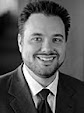
- Erik H. Beard, Esq.
- I am a consultant and general counsel to International Ride Training LLC as well as a practicing attorney in Avon, Connecticut. A particular focus of mine is the legal needs of the amusement and tourism industry. My focus on the amusement industry derives from my pre-law career as an operations manager with Cedar Fair Entertainment Company and Universal Orlando. Having started my career as a ride operator at Cedar Point in 1992, I progressed through the seasonal ranks and ultimately became the Manager of Ride Operations and Park Services at Worlds of Fun in Kansas City. I also worked in Universal's operations department during the construction and development of Islands of Adventure. Today, I am an active member of the New England Association of Amusement Parks & Attractions and the International Association of Amusement Parks & Attractions. I have been invited to speak at amusement industry meetings and seminars and have worked on a variety of matters relating to this industry.
Showing posts with label California. Show all posts
Showing posts with label California. Show all posts
Friday, November 14, 2014
On a Roll: Cedar Fair Wins A Major Victory For The Industry In The Missouri Supreme Court
Cedar Fair has done it again. In 2011, Cedar Fair came out on the losing
end of a surprising California Court of Appeals decision, Nalwa v. Cedar Fair, L.P., a
case that stunningly held that guests riding a bumper car ride do not assume
the risk of injury caused when the cars bump. In 2013, the
California Supreme Court reversed that decision in a decision that represented
a major victory for the entire industry.
In November 2013, Cedar Fair again suffered defeat in a case called Chavez v. Cedar Fair, L.P. (“Chavez I”),
this time in the Missouri Court of Appeals.
That case broadly expanded the standard of care applied in negligence cases
against amusement parks, likening their operation of amusement rides to the
operation of airplanes, explosives or firearms.
I
strongly criticized the Chavez I
decision as not only bad in result, but bad in the flawed reasoning required to
reach that result. Well, the
Missouri Supreme Court seems to have agreed (although I won’t go so far as to
surmise that any of the justices read this blog necessarily). In a decision issued on November 12 called Chavez v. Cedar Fair, L.P. (“Chavez II”),
the highest court in Missouri not only overruled the Court of Appeals ruling in
Chavez I, but also took the
remarkable step of undoing more than sixty years of case law defining
the negligence standards applied to amusement parks in Missouri. Whereas, before Chavez II, it could safely be said that some, not all, amusement
operators would be held to a heightened degree of “utmost care” in preventing
injuries to their guests, after Chavez II,
the law in Missouri is the more appropriate “ordinary care” standard in every
amusement case. This is a big win for
the industry. And once again, we have
Cedar Fair to thank for it.

Wednesday, May 28, 2014
Here & Now (Pt. 2): Is Immediate, On-Demand Ride Access For Autistic Guests Reasonable?
Click here for Here & Now (Prologue): The Question Of Autism In Amusement Parks Under The ADA
Click here for Here & Now (Pt. 1): Is Immediate Ride Boarding For Autistic Guests Really Necessary?
Click here for Here & Now (Pt. 3): Isn't Standing In Line An Essential Rule Of The Park ... Even For Autistic Guests?
 A recent
lawsuit filed against the Walt Disney Company has put before a Federal Court
in California the question of whether amusement parks have a legal obligation
under the ADA to allow autistic guests to skip the line and board rides
immediately upon arrival. It’s a question that the
industry has struggled with for years without much guidance in the legal
literature. This series is taking a
closer look at that question. Last time,
I looked at the question of whether it was “necessary,” in ADA parlance, for anautistic guest to have immediate boarding privileges. Today, I’m tackling what I believe to be the
central question raised in the Walt Disney lawsuit: Is it reasonable
to allow guests with disabilities to have on-demand, immediate boarding on amusement
rides? Put another way, is it reasonable to provide guests with disabilities with an appointment time at which immediate boarding will be granted?
A recent
lawsuit filed against the Walt Disney Company has put before a Federal Court
in California the question of whether amusement parks have a legal obligation
under the ADA to allow autistic guests to skip the line and board rides
immediately upon arrival. It’s a question that the
industry has struggled with for years without much guidance in the legal
literature. This series is taking a
closer look at that question. Last time,
I looked at the question of whether it was “necessary,” in ADA parlance, for anautistic guest to have immediate boarding privileges. Today, I’m tackling what I believe to be the
central question raised in the Walt Disney lawsuit: Is it reasonable
to allow guests with disabilities to have on-demand, immediate boarding on amusement
rides? Put another way, is it reasonable to provide guests with disabilities with an appointment time at which immediate boarding will be granted?
As I mentioned in the first piece in this
series, public accommodations, like amusement parks, are only required to make
“reasonable modifications” under the Americans With Disabilities Act. But what does "reasonable" mean in the context of an amusement park?
Sunday, January 19, 2014
GameChanger? (Part 2) - Can Ride Owners Rely On Manufacturer's Recommendations To Satisfy The ADA?
 In my last
piece, I told you about a recent ruling from the District Court for the Central
District of California in a case called Castelan
v. Universal Studios which granted judgment in Universal’s favor in a case
alleging violation of the ADA brought by two disabled guests that were not
permitted to ride The Mummy because they did not meet the minimum ride
requirements of one functioning arm / hand and one functioning leg. The court premised its ruling on two
independent grounds. The
first, which was the subject of my last piece, was that the ADA did not require
amusement ride access to guests with disabilities. That part of the ruling is, in my opinion, as
questionable as it potentially game-changing and should be taken with the
proverbial grain of salt for the time being.
But the second basis for the court’s judgment was both exactly what I
would have argued in Universal’s place and finally gives us some long
awaited guidance. So, let’s talk about
that one and what it could mean for the industry moving forward. A little preview – This holding might not be
perfect, but I think it has a lot more legs than the first one.
In my last
piece, I told you about a recent ruling from the District Court for the Central
District of California in a case called Castelan
v. Universal Studios which granted judgment in Universal’s favor in a case
alleging violation of the ADA brought by two disabled guests that were not
permitted to ride The Mummy because they did not meet the minimum ride
requirements of one functioning arm / hand and one functioning leg. The court premised its ruling on two
independent grounds. The
first, which was the subject of my last piece, was that the ADA did not require
amusement ride access to guests with disabilities. That part of the ruling is, in my opinion, as
questionable as it potentially game-changing and should be taken with the
proverbial grain of salt for the time being.
But the second basis for the court’s judgment was both exactly what I
would have argued in Universal’s place and finally gives us some long
awaited guidance. So, let’s talk about
that one and what it could mean for the industry moving forward. A little preview – This holding might not be
perfect, but I think it has a lot more legs than the first one.Wednesday, January 2, 2013
Happy New Year From The California Supreme Court! A Home Run Ruling In Nalwa v. Cedar Fair

In the law, there aren’t many things that can rightfully be
called a home run. The vast majority of “big”
decisions out there are not total wins for one side, but are judged to be “big”
because, in the main, their result effects a shift in the law or undoes a prior
bad result even while, in some modest measure, containing a small victory for
the “loser.” The recent Supreme Court
Obama-care decision is a perfect illustration: the Court upheld the individual
mandate (the big win for liberals all over the country) while making clear that
the individual mandate is, in reality, a tax (a small victory for
conservatives). On New Year’s Eve,
though, the California Supreme Court issued a rare home run opinion in Nalwa
v. Cedar Fair – an opinion that eviscerates the prior poorly-reasoned decision
of the California Court of Appeals and unambiguously establishes the right of
amusement and recreation facilities to assert the primary assumption of the
risk defense to avoid costly and uncertain trial practice. Even more remarkable, although the decision
was a 6-1 majority (a strong victory to be sure), the Court of Appeals
reasoning – that California’s public policy precludes the applicability of the
assumption of the risk doctrine to the recreation industry entirely – was unanimously rejected. There is simply no way to view this decision as
anything but a complete home run for both Cedar Fair and the amusement industry
in general.
Thursday, October 4, 2012
3 Reasons To Be Optimistic For A Reversal In Nalwa v. Cedar Fair
 Yesterday, October 3, 2012, the California Supreme Court heard argument in Nalwa v. Cedar Fair - a case I've already written about on a few occasions (like here, here, and here) and one the most closely-watched amusement industry cases in years. Due to the miracle of modern technology, I was able to observe the argument over the Internet and, while we will not know for about three months which way the Court is going to go, I am cautiously optimistic that the Supreme Court may reverse the Court of Appeals and hold that the primary assumption of risk doctrine may, in fact, be applicable to amusement park rides in California.
Friday, August 31, 2012
Could the Disney Segway Issue Be Headed To The Supreme Court?

Yesterday, the U.S. Court of Appeals for the Eleventh Circuit affirmed the trial court's ruling. Read more after the jump.
Sunday, July 29, 2012
Disney Probably Won't Have To Allow Segways ... But What About Other Parks & FEC's?

Friday, July 20, 2012
The Outrageous Reason The Disneyland Segway Ruling Should Never Have Occurred

On Wednesday, the Ninth Circuit Court of Appeals in
California issued a ruling in a case called Baughman
v. Walt Disney World ordering Disney to study the use of Segways at
Disneyland. The opinion is rather glib
from start to finish. Its opening
line: “Segways at Disneyland? Could happen.” Its ending line: a quote from Walt Disney himself, “Disneyland
will never be completed as long as there is imagination left in the world.” While I seriously doubt that Walt was talking
about the possibility of never-ending accessibility modifications under federal
regulations, the bottom line is that the Court ordered Disney to determine whether
“Segways can’t be operated safely in its parks.” Whether Disney, the industry, or I agree with
the Court’s legal analysis of the ADA or not is, at this point, largely
irrelevant – in all likelihood, it is not going to change. However, I did want to address a genuine and
disturbing issue that this case raises; one that I have seen no coverage about or
commentary on in any of the media reporting on this story: the fact that, in issuing this decision, the
Ninth Circuit essentially condoned the practice of abusive ADA litigation
brought by plaintiffs who may, or may not, actually have the disability they
claim.
Subscribe to:
Posts (Atom)