 Cedar Fair has done it again. In 2011, Cedar Fair came out on the losing
end of a surprising California Court of Appeals decision, Nalwa v. Cedar Fair, L.P., a
case that stunningly held that guests riding a bumper car ride do not assume
the risk of injury caused when the cars bump. In 2013, the
California Supreme Court reversed that decision in a decision that represented
a major victory for the entire industry.
In November 2013, Cedar Fair again suffered defeat in a case called Chavez v. Cedar Fair, L.P. (“Chavez I”),
this time in the Missouri Court of Appeals.
That case broadly expanded the standard of care applied in negligence cases
against amusement parks, likening their operation of amusement rides to the
operation of airplanes, explosives or firearms.
I
strongly criticized the Chavez I
decision as not only bad in result, but bad in the flawed reasoning required to
reach that result. Well, the
Missouri Supreme Court seems to have agreed (although I won’t go so far as to
surmise that any of the justices read this blog necessarily). In a decision issued on November 12 called Chavez v. Cedar Fair, L.P. (“Chavez II”),
the highest court in Missouri not only overruled the Court of Appeals ruling in
Chavez I, but also took the
remarkable step of undoing more than sixty years of case law defining
the negligence standards applied to amusement parks in Missouri. Whereas, before Chavez II, it could safely be said that some, not all, amusement
operators would be held to a heightened degree of “utmost care” in preventing
injuries to their guests, after Chavez II,
the law in Missouri is the more appropriate “ordinary care” standard in every
amusement case. This is a big win for
the industry. And once again, we have
Cedar Fair to thank for it.
Cedar Fair has done it again. In 2011, Cedar Fair came out on the losing
end of a surprising California Court of Appeals decision, Nalwa v. Cedar Fair, L.P., a
case that stunningly held that guests riding a bumper car ride do not assume
the risk of injury caused when the cars bump. In 2013, the
California Supreme Court reversed that decision in a decision that represented
a major victory for the entire industry.
In November 2013, Cedar Fair again suffered defeat in a case called Chavez v. Cedar Fair, L.P. (“Chavez I”),
this time in the Missouri Court of Appeals.
That case broadly expanded the standard of care applied in negligence cases
against amusement parks, likening their operation of amusement rides to the
operation of airplanes, explosives or firearms.
I
strongly criticized the Chavez I
decision as not only bad in result, but bad in the flawed reasoning required to
reach that result. Well, the
Missouri Supreme Court seems to have agreed (although I won’t go so far as to
surmise that any of the justices read this blog necessarily). In a decision issued on November 12 called Chavez v. Cedar Fair, L.P. (“Chavez II”),
the highest court in Missouri not only overruled the Court of Appeals ruling in
Chavez I, but also took the
remarkable step of undoing more than sixty years of case law defining
the negligence standards applied to amusement parks in Missouri. Whereas, before Chavez II, it could safely be said that some, not all, amusement
operators would be held to a heightened degree of “utmost care” in preventing
injuries to their guests, after Chavez II,
the law in Missouri is the more appropriate “ordinary care” standard in every
amusement case. This is a big win for
the industry. And once again, we have
Cedar Fair to thank for it.
About Me
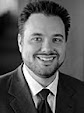
- Erik H. Beard, Esq.
- I am a consultant and general counsel to International Ride Training LLC as well as a practicing attorney in Avon, Connecticut. A particular focus of mine is the legal needs of the amusement and tourism industry. My focus on the amusement industry derives from my pre-law career as an operations manager with Cedar Fair Entertainment Company and Universal Orlando. Having started my career as a ride operator at Cedar Point in 1992, I progressed through the seasonal ranks and ultimately became the Manager of Ride Operations and Park Services at Worlds of Fun in Kansas City. I also worked in Universal's operations department during the construction and development of Islands of Adventure. Today, I am an active member of the New England Association of Amusement Parks & Attractions and the International Association of Amusement Parks & Attractions. I have been invited to speak at amusement industry meetings and seminars and have worked on a variety of matters relating to this industry.
Showing posts with label Nalwa. Show all posts
Showing posts with label Nalwa. Show all posts
Friday, November 14, 2014
On a Roll: Cedar Fair Wins A Major Victory For The Industry In The Missouri Supreme Court
Cedar Fair has done it again. In 2011, Cedar Fair came out on the losing
end of a surprising California Court of Appeals decision, Nalwa v. Cedar Fair, L.P., a
case that stunningly held that guests riding a bumper car ride do not assume
the risk of injury caused when the cars bump. In 2013, the
California Supreme Court reversed that decision in a decision that represented
a major victory for the entire industry.
In November 2013, Cedar Fair again suffered defeat in a case called Chavez v. Cedar Fair, L.P. (“Chavez I”),
this time in the Missouri Court of Appeals.
That case broadly expanded the standard of care applied in negligence cases
against amusement parks, likening their operation of amusement rides to the
operation of airplanes, explosives or firearms.
I
strongly criticized the Chavez I
decision as not only bad in result, but bad in the flawed reasoning required to
reach that result. Well, the
Missouri Supreme Court seems to have agreed (although I won’t go so far as to
surmise that any of the justices read this blog necessarily). In a decision issued on November 12 called Chavez v. Cedar Fair, L.P. (“Chavez II”),
the highest court in Missouri not only overruled the Court of Appeals ruling in
Chavez I, but also took the
remarkable step of undoing more than sixty years of case law defining
the negligence standards applied to amusement parks in Missouri. Whereas, before Chavez II, it could safely be said that some, not all, amusement
operators would be held to a heightened degree of “utmost care” in preventing
injuries to their guests, after Chavez II,
the law in Missouri is the more appropriate “ordinary care” standard in every
amusement case. This is a big win for
the industry. And once again, we have
Cedar Fair to thank for it.

Friday, July 19, 2013
Planes, Trains, & Waterslides? Missouri Imposes Heightened Liability Standard On Amusement And Water Parks


The Missouri Court of Appeals this week issued a stunning
decision in Chavez v. Cedar Fair L.P.
holding that a water slide operator (or, in that case, a family raft ride
operator) owes the same duty of care as a so-called “common carrier,” i.e.
operators of mass transportation – airplanes, trains, ships, etc., to safeguard
guest safety. In so holding, Missouri has
become the first state in the country to impose this heightened standard of
liability on water park operators. The
Court’s analysis is fundamentally flawed both in its application to the
allegations in this case and in providing guidance to future courts in future
cases. Even accepting the Court’s
suspect legal analysis, the result ignores the plaintiff’s own allegations of
liability – allegations which should have resulted in a lower standard of care
than that which the Court imposed.
Moreover, and more importantly, the Court failed to undertake the case-by-case
analysis the court claims is required to reach the result it did, thus sending
the wrong message to future courts. If
permitted to stand, this decision will increase liability exposure to Missouri amusement
operators (both water park and otherwise) and sets a dangerous precedent for amusement
industry cases filed in other jurisdictions.
More on all of this after the jump.**
Wednesday, January 2, 2013
Happy New Year From The California Supreme Court! A Home Run Ruling In Nalwa v. Cedar Fair

In the law, there aren’t many things that can rightfully be
called a home run. The vast majority of “big”
decisions out there are not total wins for one side, but are judged to be “big”
because, in the main, their result effects a shift in the law or undoes a prior
bad result even while, in some modest measure, containing a small victory for
the “loser.” The recent Supreme Court
Obama-care decision is a perfect illustration: the Court upheld the individual
mandate (the big win for liberals all over the country) while making clear that
the individual mandate is, in reality, a tax (a small victory for
conservatives). On New Year’s Eve,
though, the California Supreme Court issued a rare home run opinion in Nalwa
v. Cedar Fair – an opinion that eviscerates the prior poorly-reasoned decision
of the California Court of Appeals and unambiguously establishes the right of
amusement and recreation facilities to assert the primary assumption of the
risk defense to avoid costly and uncertain trial practice. Even more remarkable, although the decision
was a 6-1 majority (a strong victory to be sure), the Court of Appeals
reasoning – that California’s public policy precludes the applicability of the
assumption of the risk doctrine to the recreation industry entirely – was unanimously rejected. There is simply no way to view this decision as
anything but a complete home run for both Cedar Fair and the amusement industry
in general.
Thursday, October 4, 2012
3 Reasons To Be Optimistic For A Reversal In Nalwa v. Cedar Fair
 Yesterday, October 3, 2012, the California Supreme Court heard argument in Nalwa v. Cedar Fair - a case I've already written about on a few occasions (like here, here, and here) and one the most closely-watched amusement industry cases in years. Due to the miracle of modern technology, I was able to observe the argument over the Internet and, while we will not know for about three months which way the Court is going to go, I am cautiously optimistic that the Supreme Court may reverse the Court of Appeals and hold that the primary assumption of risk doctrine may, in fact, be applicable to amusement park rides in California.
Wednesday, January 25, 2012
How To Give Your Lawyer A Cardiac Arrest .... Brought To You By The Reading Phillies
Hi everyone! Miss
me? Its been crazy the last few weeks as
I have been working on a very large case that is going to trial next month in
Oregon state court. Unfortunately, this
has occupied so much of my time that I was unavoidably forced to neglect my
duties to The Legal Roller Coaster. Well
that stops here and now because I’ve just seen something that practically
screams out for some attention. And,
given that this is my first post of the New Year, I thought it would be fun to
start off with something a bit on the lighter side. Ladies and Gentleman, I give you, “The
Defense Lawyer’s Nightmare” a/k/a “The Worst Idea For A Promotional Event In
History” Seriously, you have to check
this out – but please, PLEASE, don’t try anything you are about to see at your facility:
Tuesday, November 22, 2011
UPDATE: Wallace v. SeaWorld's Roadmap For Reversing Nalwa v. Cedar Fair
Last week I attended IAAPA Expo 2011 in beautiful (and much warmer than Connecticut) Orlando, Florida. I think all who attended can agree that it was a great time and a fantastic networking opportunity. To all of you who I met there, I hope to see you soon. To all of you who I didn't, I hope to meet you soon.
While at IAAPA, I had the opportunity to speak with several of my colleagues, both in and out of any one of the kazillion educational sessions IAAPA offers, and specifically to speak with some of them about last summer's decision from the California federal court in Wallace v. Busch Entertainment. I've previously written about this case to express my belief that it could contain a subtle signal that at least one federal judge in California does not believe that the Nalwa decision is long for this world. (I've also written on the Nalwa decision previously - you can find that here). I continue to believe that the absence of any mention of the Nalwa ruling in Wallace may speak volumes about its perceived persuasiveness. However a colleague of mine, who practices in California, was not as convinced that there was any message or implication in the Wallace ruling. According to my colleague, the absence of Nalwa in the Wallace decision is not attributable to the federal court's potential belief that Nalwa is a poor decision, but is simply a product of a California appellate rule that prohibits any court from citing the Nalwa decision once the California Supreme Court has agreed to review the decision. Well - not being versed in California appellate rules (remember folks, I practice in Connecticut and the two states are PRETTY different), this stopped me in my tracks ... momentarily. After all, if the Wallace court didn't cite to Nalwa because it wasn't allowed to - where does that leave my entire premise. Well, I'm happy to report that my premise is safe and sound, and in fact, even assuming my colleague is correct about this rule, even stronger than it was before I knew about the rule. Keep reading after the jump if you want to know why.
While at IAAPA, I had the opportunity to speak with several of my colleagues, both in and out of any one of the kazillion educational sessions IAAPA offers, and specifically to speak with some of them about last summer's decision from the California federal court in Wallace v. Busch Entertainment. I've previously written about this case to express my belief that it could contain a subtle signal that at least one federal judge in California does not believe that the Nalwa decision is long for this world. (I've also written on the Nalwa decision previously - you can find that here). I continue to believe that the absence of any mention of the Nalwa ruling in Wallace may speak volumes about its perceived persuasiveness. However a colleague of mine, who practices in California, was not as convinced that there was any message or implication in the Wallace ruling. According to my colleague, the absence of Nalwa in the Wallace decision is not attributable to the federal court's potential belief that Nalwa is a poor decision, but is simply a product of a California appellate rule that prohibits any court from citing the Nalwa decision once the California Supreme Court has agreed to review the decision. Well - not being versed in California appellate rules (remember folks, I practice in Connecticut and the two states are PRETTY different), this stopped me in my tracks ... momentarily. After all, if the Wallace court didn't cite to Nalwa because it wasn't allowed to - where does that leave my entire premise. Well, I'm happy to report that my premise is safe and sound, and in fact, even assuming my colleague is correct about this rule, even stronger than it was before I knew about the rule. Keep reading after the jump if you want to know why.
Friday, August 19, 2011
Are California Courts Already Signaling Doubt About The Future Of The Nalwa Decision?
On Tuesday (8/16/11), the United States District Court for the Southern District of California issued an interesting decision in Wallace v. Busch Entertainment Corporation (now Seaworld Parks & Entertainment). The factual background of the case is not especially remarkable - it is a rather run-of-the-mill personal injury lawsuit. The plaintiff purchased a ticket to use the bungee trampoline in Seaworlds "Xtreme Zone," read and signed a liability waiver, followed the directions of the attendant, and was injured (a torn tendon in his left bicep). The plaintiff sued alleging theories of negligence, negligence per se, gross negligence, breach of warranty, and products liability. The court ultimately found that the plaintiff's breach of warranty and products liability claims were meritless and granted judgment in Seaworld's favor as to those counts. Additionally, the court held that the plaintiff's negligence claim was foreclosed by the liability waiver he had signed, and therefore found in Seaworld's favor on that count as well.
However, despite these victories, Seaworld did not prevail on plaintiff's negligence per se, and gross negligence claims, and it is in this respect that the case is really interesting - not because of anything the Court said, but because of what it didn't.
However, despite these victories, Seaworld did not prevail on plaintiff's negligence per se, and gross negligence claims, and it is in this respect that the case is really interesting - not because of anything the Court said, but because of what it didn't.
Friday, June 17, 2011
Controversial California Ruling On Assumption of Risk
This week the California Court of Appeals, Sixth District, issued its ruling in Nalwa v. Cedar Fair, LP., holding that a California amusement park operator cannot rely on the doctrine of assumption of risk to defend against a negligence lawsuit because 1) doing so would undermine California's policy of strict regulation of amusement rides and 2) because, even putting aside public policy, the doctrine of assumption of risk simply does not apply to amusement rides in California. The decision is potentially a game changer in California, and will undoubtedly be influential in other ride related cases around the country.
Subscribe to:
Posts (Atom)